Welcome to Lakeside
Living in Lakeside, San Francisco
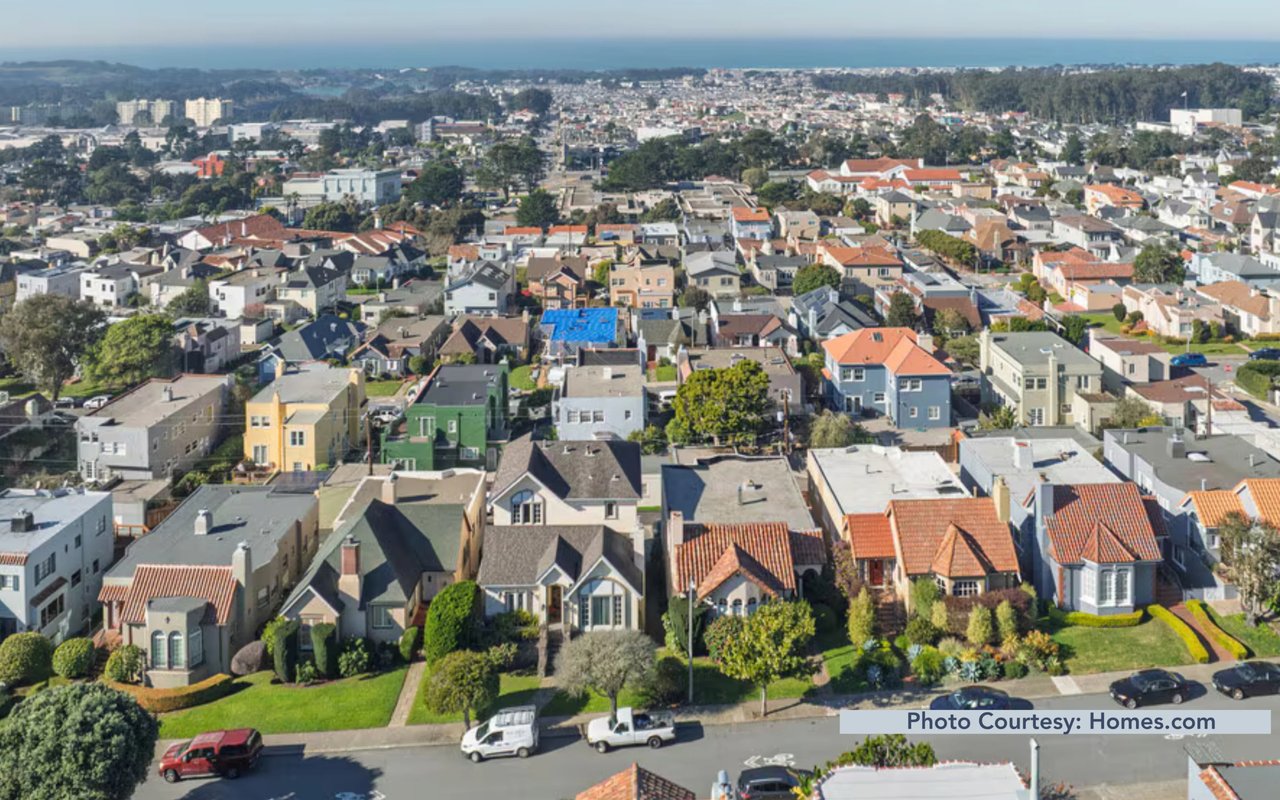
A planned residential neighborhood in southwestern San Francisco, developed between 1936 and 1950 by the Stoneson Development Company. Located between 19th Avenue and Junipero Serra Boulevard, it combines period-style single-family homes, curving residential streets, and a compact commercial district known as Lakeside Village.
The neighborhood has a recognizable architectural identity. Many houses feature stucco exteriors, pitched or tiled roof accents, decorative entrances, garages, and private yards. Some streets have landscaped setbacks and service lanes that distinguish Lakeside from San Francisco's more conventional rectangular street grids.
Ocean Avenue runs through the northern part of the neighborhood, providing shops, restaurants, and K Ingleside light rail service. Stonestown Galleria and San Francisco State University are nearby, while Lake Merced offers recreational opportunities farther southwest.
For buyers, Lakeside real estate combines established residential construction with access to transit and daily amenities. For sellers and investors, property condition, original design, ownership restrictions, and differences between the neighborhood's three development phases are important considerations.
Where Is Lakeside?
Lakeside occupies a narrow area of southwestern San Francisco between 19th Avenue and Junipero Serra Boulevard.
Its northern edge is generally Sloat Boulevard. The neighborhood extends south toward the point where 19th Avenue and Junipero Serra Boulevard converge near the city boundary.
Ocean Avenue crosses the northern portion, forming the Lakeside Village commercial corridor.
The neighborhood is distinct from Lake Shore, the larger area west of 19th Avenue, and from Stonestown, which includes the nearby shopping center and institutional properties.
Lakeside is classified as MLS District 3E, within San Francisco's southwest real estate district.
The neighborhood's historic development is divided into Lakeside I, II, and III. These are recognized phases of the original subdivision rather than marketing names created for current listings.
Although its name refers to nearby Lake Merced, Lakeside is not directly on the lakefront.
Homes and Real Estate in Lakeside
Lakeside real estate is dominated by single-family houses developed during the late 1930s and 1940s, with construction continuing through approximately 1950.
The neighborhood was designed as a coordinated residential community. Its housing stock reflects a more unified architectural approach than many San Francisco districts built incrementally by numerous unrelated developers.
Period-Style Single-Family Homes
Many Lakeside homes feature stucco facades, decorative entryways, pitched roofs, and architectural influences associated with Mediterranean Revival, Spanish Colonial Revival, and other traditional residential styles.
Original interiors may contain hardwood floors, fireplaces, plaster finishes, and separated living and dining rooms.
The extent of preserved original features varies considerably. Some houses have undergone extensive remodeling, while others retain their earlier layouts.
Garages, Lots, and Outdoor Space
Private garages and yards are important characteristics of Lakeside housing.
Some properties use rear service lanes, creating a different relationship between vehicle access and the main residential street.
Lot configurations, garage access, and setbacks vary between the three development phases.
Buyers should verify parking dimensions, property lines, easements, and any shared access arrangements rather than assuming all houses follow the same configuration.
Condominiums and Multifamily Properties
Traditional condominium and multifamily buildings are less characteristic of the original Lakeside development than single-family houses.
Nearby Stonestown, Parkmerced, and Ocean Avenue areas contain different residential property types and should be analyzed separately.
For any condominium or tenancy-in-common property, review the applicable ownership documents, financing requirements, maintenance obligations, and insurance arrangements.
Building Condition and Renovation
Lakeside homes are old enough that roofing, plumbing, electrical systems, foundations, and drainage deserve careful inspection.
Changes to original floor plans, garages, or lower-level spaces should be checked against approved permits.
Exterior renovations may also be affected by recorded subdivision restrictions or other property-specific requirements.
Residential Areas and Micro-Markets
Lakeside has three historically recognized development phases, plus a commercial corridor that influences nearby residential properties.
Lakeside I
Lakeside I occupies the northern portion of the development and includes the Lakeside Village shopping corridor along Ocean Avenue.
Properties near the shops and K Ingleside stops have convenient access to services and transit, with potentially greater exposure to commercial activity and traffic.
Lakeside II
Lakeside II is the middle section of the planned development.
Its residential streets reflect the neighborhood's coordinated architecture, with detached houses, setbacks, and varied garage arrangements.
Recorded property restrictions and association obligations should be reviewed for individual parcels.
Lakeside III
Lakeside III occupies the southern portion of the original development.
Buyers should compare lot dimensions, building designs, street exposure, and access arrangements with properties in Lakeside I and II.
19th Avenue and Junipero Serra Boulevard Edges
Some Lakeside houses back onto or face streets near these major traffic corridors.
Properties along Stonecrest Drive and Denslowe Drive illustrate why a home's actual entrance and driveway location can differ from the street it appears to border on a map.
Traffic noise, rear-yard exposure, and proposed land-use changes deserve property-specific investigation.
Architecture and Neighborhood History
Lakeside was developed by brothers Henry and Ellis Stoneson through the Stoneson Development Company.
Construction began in 1936, during a period when San Francisco was expanding its residential neighborhoods toward Lake Merced.
The Stonesons envisioned a planned community with coordinated housing and a dedicated shopping district. Their development ultimately included three residential phases and Lakeside Village.
The neighborhood's architecture reflects the residential preferences of the late 1930s and 1940s. Stucco houses, traditional roof forms, decorative facades, garages, and landscaped setbacks contribute to its appearance.
Unlike districts extensively rebuilt immediately after the 1906 earthquake, Lakeside developed several decades later. Its history is therefore more closely connected to Depression-era housing finance, automobile ownership, and postwar residential growth.
The Stoneson brothers later developed Stonestown, linking the two areas through a shared development history.
Lakeside's historic planning also included restrictive property practices characteristic of some residential developments of that era. Such restrictions form part of the neighborhood's history but cannot lawfully be enforced in ways that violate Fair Housing protections.
Property owners should examine recorded covenants, architectural guidelines, and any historic resource status before planning major alterations.
Parks, Recreation, and Outdoor Activities
Lakeside is primarily residential, with larger public recreation areas located in surrounding neighborhoods.
Lake Merced
Lake Merced lies southwest of Lakeside, beyond the Stonestown and Lake Shore areas.
The lake has walking and cycling paths, fishing access, picnic facilities, and open space. It is a significant recreational destination for southwestern San Francisco.
Stern Grove and Pine Lake Park
Northwest of Lakeside, Stern Grove and Pine Lake Park offer wooded trails, open lawns, and recreational opportunities.
Stern Grove is also known for its outdoor performance setting.
Nearby Golf and Coastal Recreation
TPC Harding Park and other golf facilities near Lake Merced provide additional recreation.
Farther west, Ocean Beach and Fort Funston offer coastal walks, ocean views, and trails.
These destinations are outside Lakeside's residential boundary, so access varies by location and transportation choice.
Shopping, Dining, and Local Amenities
Lakeside Village is the neighborhood's defining commercial district.
Located on Ocean Avenue between Junipero Serra Boulevard and 19th Avenue, the corridor contains restaurants, cafes, specialty retailers, and neighborhood services.
Unlike larger commercial districts, Lakeside Village occupies a relatively short stretch of Ocean Avenue. Its scale reflects the original plan for a residential community served by local businesses.
Stonestown Galleria, immediately west of 19th Avenue, offers a broader selection of retail, dining, and services.
Ocean Avenue continues east through other San Francisco neighborhoods, providing additional shopping and dining options.
San Francisco State University is nearby, contributing educational and cultural activity to the surrounding area.
Residents should consider the distance between their home and the Ocean Avenue corridor, particularly when comparing northern and southern Lakeside properties.
Transportation and Commuting
The K Ingleside Muni Metro line is Lakeside's most direct rail connection.
It operates along Ocean Avenue and Junipero Serra Boulevard, connecting the neighborhood with West Portal Station, the Market Street subway, and downtown San Francisco.
The line also continues toward Balboa Park, where passengers can connect with BART.
Muni bus service is available on surrounding major streets, including 19th Avenue. Route availability and walking distances should be verified for individual addresses.
Drivers use 19th Avenue and Junipero Serra Boulevard for north-south travel. Ocean Avenue and Sloat Boulevard provide important east-west connections.
The neighborhood's residential streets differ from the surrounding arterials. Some blocks are curved, and certain properties have access from rear lanes.
Garages are common, but dimensions and accessibility vary.
Walking to Lakeside Village is convenient from some northern blocks, while southern properties are farther from the commercial corridor. Cycling routes and major intersections should be evaluated based on current street conditions.
Schools and Education
Lakeside and its surrounding neighborhoods have access to several educational institutions.
San Francisco State University is west of 19th Avenue, near Stonestown.
Nearby schools include St. Stephen School, an independent Catholic school, and public schools in the surrounding southwest San Francisco area.
City College of San Francisco's Ocean Campus is farther east along the Ocean Avenue corridor.
The Merced Branch Library, near Stonestown, provides public library services and educational programs.
Public school enrollment depends on current San Francisco Unified School District policies. Independent schools establish their own admissions requirements.
School attendance boundaries and enrollment policies may change. Buyers should confirm school assignments directly with the appropriate district.
Buying a Home in Lakeside
Buying Lakeside real estate involves more than comparing square footage and finishes.
Begin with the property's development phase, legal description, permit history, and recorded restrictions. The Lakeside Property Owners Association and historic subdivision covenants may affect certain properties.
Review inspections for foundation condition, seismic vulnerabilities, roofing, drainage, electrical systems, and plumbing.
Check garage access, rear service lanes, easements, and any remodeled lower-level areas. Finished space should be evaluated against approved plans and legal occupancy.
Properties near 19th Avenue or Junipero Serra Boulevard may have different noise exposure and land-use considerations than interior homes.
For condominiums or other shared-ownership properties, examine association reserves, insurance, assessments, and financing requirements.
Property-specific insurance and natural hazard reports are also important.
Comparable sales should come from similar Lakeside houses whenever possible, with appropriate adjustments for development phase, lot characteristics, condition, and location.
Selling a Home in Lakeside
Selling a Lakeside home requires a pricing and preparation strategy grounded in the neighborhood's specific housing stock.
Buyers may compare original period details, remodeled interiors, usable floor plans, garage arrangements, private yards, and street exposure.
A property near Ocean Avenue may compete differently from a house on an interior street or along a major roadway.
Start with recent closed sales of comparable Lakeside properties, considering permitted living area, lot dimensions, condition, and renovation quality.
Before undertaking improvements, evaluate whether repairs to roofing, drainage, plumbing, or electrical systems should take priority over cosmetic updates.
Professional photography, accurate floor plans, staging, and thorough disclosures help buyers evaluate the property.
Charlie Brown uses construction management experience, valuation analysis, and negotiation skills to help sellers assess preparation costs, develop pricing, and position their homes within the current market.
Real Estate Investment in Lakeside
Lakeside's investment profile differs from neighborhoods with substantial concentrations of duplexes and apartment buildings.
The original development primarily consists of single-family houses, making long-term ownership, renovation, and rental analysis particularly relevant.
Investors should investigate whether proposed additions or accessory dwelling units are feasible under current zoning, building codes, recorded restrictions, and site conditions.
Financial underwriting should account for purchase price, financing, property taxes, insurance, repairs, maintenance, vacancy, and future capital improvements.
For properties with tenants, review lease terms, tenancy history, permitted occupancy, and applicable San Francisco and California rental laws.
Rent stabilization, eviction protections, and relocation requirements may materially affect renovation planning and investment returns. Applicability depends on the property and tenancy.
Small multifamily opportunities in nearby neighborhoods should be analyzed separately rather than treated as representative Lakeside properties.
Long-term ownership strategies should use realistic operating assumptions and documented property conditions.
Frequently Asked Questions About Lakeside
Where Is Lakeside Located in San Francisco?
Lakeside is in southwestern San Francisco, between 19th Avenue and Junipero Serra Boulevard. It extends from Sloat Boulevard south toward the point where the two major roads converge. Ocean Avenue crosses its northern section. The neighborhood is separate from Lake Shore and Stonestown.
What Types of Homes Are Available in Lakeside?
Lakeside is primarily composed of single-family homes developed between 1936 and 1950. Many feature stucco facades, period-style architecture, garages, and private yards. Condominiums and larger multifamily buildings are more common in surrounding neighborhoods than in the original Lakeside development.
What are Lakeside I, II, and III?
Lakeside I, II, and III are the three original development phases of the Stoneson neighborhood. Lakeside I is the northern section, Lakeside II the middle, and Lakeside III the southern section. Their property configurations and recorded restrictions may differ, so buyers should review individual parcel documents.
Is Lakeside the Same as Lake Shore?
No. Lakeside and Lake Shore are separate San Francisco real estate neighborhoods. Lakeside is east of 19th Avenue and classified as MLS 3E. Lake Shore is a different area west of 19th Avenue, classified as MLS 3A. Their housing histories and property types differ.
What Shopping Is Available in Lakeside?
Lakeside Village is a compact shopping and dining district along Ocean Avenue between Junipero Serra Boulevard and 19th Avenue. It includes restaurants, cafes, retail businesses, and services. Stonestown Galleria is nearby and provides additional shopping and dining choices.
What Public Transportation Serves Lakeside?
The K Ingleside Muni Metro line serves Ocean Avenue and Junipero Serra Boulevard, connecting Lakeside with West Portal, downtown San Francisco, and Balboa Park. Other transit services operate nearby. Buyers should verify stop locations, current schedules, and walking distances for a specific property.
Are There Property Owners Association Rules in Lakeside?
Some Lakeside properties are subject to recorded restrictions and property owners association requirements, particularly in Lakeside II and III. Obligations can vary by parcel. Buyers should obtain the current governing documents, verify assessments and restrictions, and review proposed renovations against applicable requirements.
How Can I Determine My Lakeside Home's Market Value?
A property-specific valuation should compare recent Lakeside sales with similar floor plans, lot characteristics, garage arrangements, condition, and locations. Development phase and street exposure may also matter. Charlie Brown can prepare a comparative market analysis and evaluate how your home's condition and improvements affect its positioning.
Work With Charlie Brown
Charlie Brown is a San Francisco Realtor and real estate investment advisor who has lived in the city since 2001.
He combines local market knowledge, construction management experience, property evaluation, and negotiation expertise to advise buyers, sellers, and investors.
For buyers, Charlie reviews disclosures, building condition, ownership restrictions, renovation potential, and long-term costs. For sellers, he develops pricing and preparation strategies informed by comparable sales and property characteristics.
His investment advisory work includes renovation analysis, small multifamily properties, and long-term ownership strategies that support generational wealth.
If you're considering buying, selling, or investing in Lakeside real estate, contact Charlie Brown to discuss your property and real estate goals.