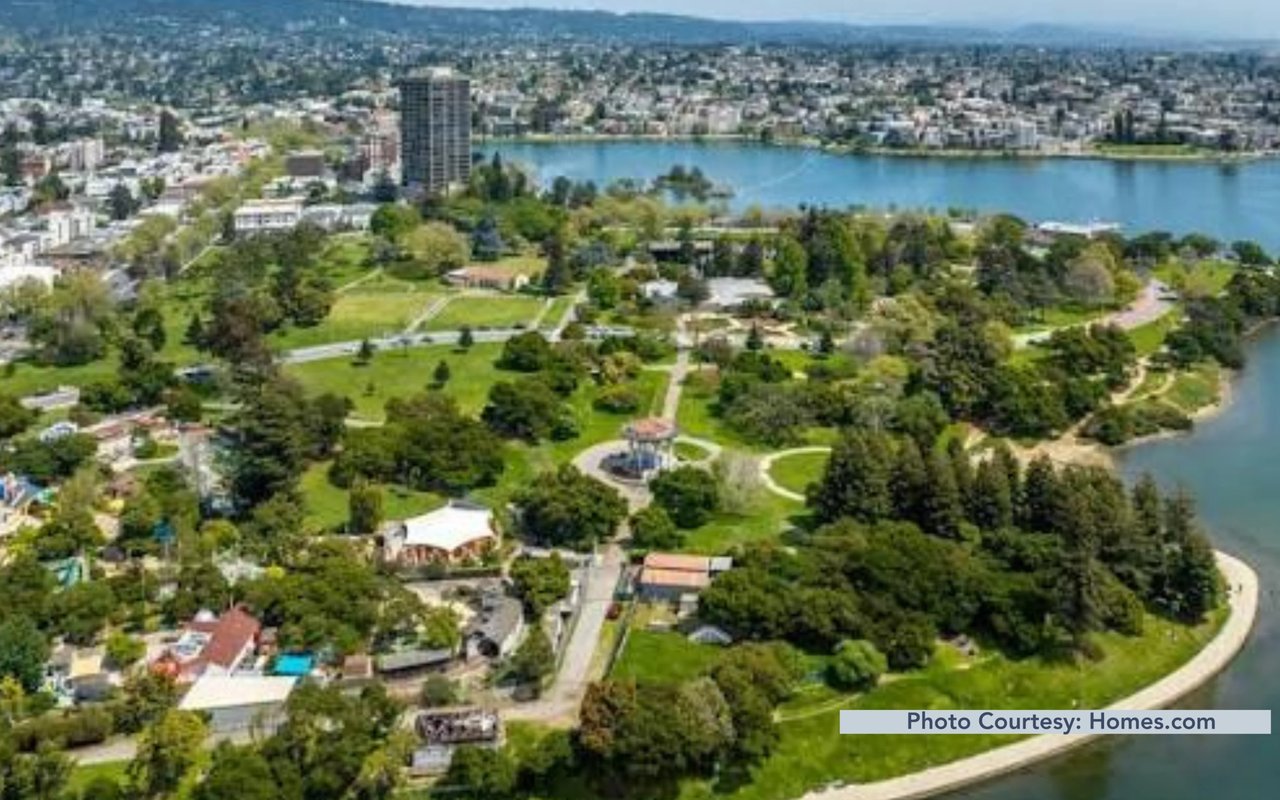
Welcome to Lakeshore
Living in Lakeshore, San Francisco
A residential neighborhood in southwestern San Francisco, near Lake Merced, Sloat Boulevard, and the city's western coastline. Known for its mid-century homes, established residential streets, and access to large public recreation areas, Lakeshore offers a different setting from the denser neighborhoods closer to downtown.
Much of the neighborhood developed during the 1940s and early 1950s as San Francisco expanded around Lake Merced. Builders introduced coordinated residential designs with garages, private yards, and floor plans reflecting changing housing preferences during and after World War II.
Today, Lakeshore contains single-family houses with stucco exteriors, traditional layouts, and postwar architectural features. Residential streets such as Inverness Drive and Clearfield Drive reflect the neighborhood's planned development.
Daily shopping and services are concentrated near Sloat Boulevard, while Lake Merced provides opportunities for walking, cycling, and outdoor recreation.
For buyers, Lakeshore real estate offers access to established housing stock and relatively spacious residential configurations. Sellers and investors should consider how building condition, permitted improvements, location, and the neighborhood's limited supply of comparable property types affect individual valuations.
Where Is Lakeshore?
Lakeshore is located in the southwestern portion of San Francisco, around the northern and western approaches to Lake Merced.
The historic Lakeshore Park residential development lies south of Sloat Boulevard, generally between Sunset Boulevard, Inverness Drive, and Lake Merced Boulevard. The broader Lakeshore name is also used for surrounding residential and recreational areas.
Nearby neighborhoods include Pine Lake Park to the north, Merced Manor and Lakeside to the east, and Stonestown and Parkmerced farther east and southeast.
The San Francisco Zoo and western coastline lie nearby, while Lake Merced and its surrounding recreational facilities define much of the area's southern geography.
In the San Francisco real estate MLS, Lake Shore is identified as District 3A. This is different from Lakeside, Merced Manor, Pine Lake Park, and Stonestown, which have separate MLS classifications.
Buyers comparing properties should pay attention to these distinctions. Homes that appear close together on a map may belong to different residential developments with different architectural characteristics and sales histories.
Homes and Real Estate in Lakeshore
Lakeshore real estate is closely associated with San Francisco's mid-century residential development.
Unlike neighborhoods dominated by Victorian or Edwardian flats, Lakeshore contains substantial concentrations of single-family homes constructed during the 1940s and early 1950s.
Prewar and Wartime-Era Homes
Early Lakeshore Park construction included relatively compact single-family houses designed for efficient use of residential lots.
These homes commonly feature stucco exteriors, straightforward floor plans, attached or integrated garages, and modest front setbacks.
Some retain original hardwood flooring, decorative plasterwork, fireplaces, and period interior finishes.
Buyers should examine how previous renovations have affected room layouts, structural systems, and permitted living area.
Postwar Ranch and Split-Level Homes
Later Lakeshore construction introduced detached houses, ranch-influenced designs, split-level layouts, and larger garage configurations.
These homes may offer more separation between living areas, bedrooms, garages, and outdoor space than earlier designs.
Some properties have side yards or more generous setbacks, although lot dimensions and building footprints vary.
Split-level houses require careful evaluation of stairs, drainage, foundations, and connections between different floor elevations.
Condominiums and Other Housing Types
Condominiums, apartments, and multifamily properties are more prevalent in some of the broader Lake Merced and Stonestown areas than in the historic Lakeshore Park single-family tract.
Buyers should distinguish these surrounding housing markets rather than assuming they share the same ownership patterns or comparable sales.
For condominium properties, review homeowners association finances, insurance, maintenance obligations, and special assessments.
Renovation and Building Condition
Many Lakeshore homes have reached an age where major building components may require replacement or modernization.
Roofing, electrical wiring, plumbing, heating, windows, and drainage systems deserve attention.
Renovation plans should also account for seismic performance, permit history, foundation condition, and potential restrictions on changes to the building footprint.
Residential Areas and Micro-Markets
Lakeshore has several recognizable residential settings. These descriptions refer to geographic and architectural differences rather than official subdivisions.
Historic Lakeshore Park
The original Lakeshore Park tract contains homes developed by the Standard Building Company during the 1940s and early 1950s.
Buyers encounter both earlier compact designs and later postwar houses with different garage and floor-plan configurations.
Inverness Drive and Interior Streets
Residential streets around Inverness Drive contain established single-family housing with a planned neighborhood layout.
Differences in lot size, building orientation, renovation quality, and garage access can affect how individual homes compare.
Sunset Boulevard and Sloat Boulevard Edges
Properties closer to major streets have convenient road access but may experience greater vehicle traffic and noise than interior residential blocks.
Buyers should evaluate street frontage, sound insulation, driveway access, and parking conditions.
Lake Merced Boulevard Area
Homes near Lake Merced Boulevard have access to lake recreation and nearby open space.
Location-specific considerations include road exposure, drainage, wind, and access to walking and cycling routes.
Lakeshore Plaza Vicinity
Residential streets around the Lakeshore Plaza shopping area offer proximity to grocery shopping, retail services, and transit connections.
Some nearby properties fall within separately identified residential neighborhoods, so MLS boundaries should be checked before using them as comparable sales.
Architecture and Neighborhood History
The history of Lakeshore is tied to the development of the Lake Merced area and the expansion of residential San Francisco during the 20th century.
Before large-scale housing construction, land around Lake Merced supported agriculture, water infrastructure, recreational uses, and undeveloped open space.
During the 1930s and 1940s, residential builders began creating planned subdivisions around the lake.
Carl and Fred Gellert, founders of the Standard Building Company, played an important role in Lakeshore Park's development.
Their company built residential properties before World War II and resumed construction after the war with designs reflecting changing preferences for detached homes, ranch-style architecture, split-level layouts, and larger garages.
The neighborhood was substantially developed by the early 1950s.
This history also includes discriminatory housing practices. As in other American residential developments of the period, exclusionary sales practices affected access to homeownership. Understanding this history provides important context for how San Francisco's residential neighborhoods developed.
Today, the architectural identity of Lakeshore is closely connected to its original mid-century housing.
Owners planning major alterations should verify permit requirements and any property-specific historic resource considerations.
Parks, Recreation, and Outdoor Activities
Lakeshore has access to some of San Francisco's largest recreational spaces.
Lake Merced
Lake Merced is a major freshwater lake surrounded by public parkland.
The park includes a paved perimeter trail of approximately 4.5 miles, along with picnic areas, fishing access, a boat launch, and natural habitat.
Residents use the area for walking, running, cycling, birdwatching, and other outdoor activities.
TPC Harding Park
TPC Harding Park is a public golf facility beside Lake Merced.
Its location contributes to the area's extensive open space and recreational character.
Fort Funston
Fort Funston, west and south of the residential neighborhood, provides coastal trails, bluff-top viewpoints, and access to the Pacific shoreline.
The area is part of the Golden Gate National Recreation Area. Coastal winds and changing trail conditions are important considerations for visitors.
San Francisco Zoo and Ocean Beach
The San Francisco Zoo is located near Sloat Boulevard and the western shoreline.
Ocean Beach provides additional opportunities for coastal walks and outdoor recreation. Strong currents and cold water make ocean safety an important consideration.
Stern Grove and Pine Lake Park
North of Lakeshore, Stern Grove and Pine Lake Park offer wooded walking paths, open space, and recreational opportunities.
These parks expand the range of outdoor activities available in the surrounding southwest San Francisco area.
Shopping, Dining, and Local Amenities
Lakeshore's commercial activity is concentrated along Sloat Boulevard and nearby shopping areas rather than a continuous traditional main street.
Lakeshore Plaza serves as a neighborhood retail center with space for grocery shopping, services, and other everyday needs.
The surrounding Sloat Boulevard corridor provides additional commercial destinations and connections to the Sunset and Parkside districts.
For a broader selection of restaurants, cafes, and retail businesses, residents can travel to West Portal, Ocean Avenue, Stonestown Galleria, and other nearby commercial areas.
Stonestown Galleria is a larger regional shopping destination east of Lake Merced. It serves a different retail function from the smaller-scale Lakeshore Plaza center.
The neighborhood's layout makes the distance between residential blocks and commercial destinations an important consideration.
Some homes are convenient to daily shopping on foot, while others require a longer walk, bicycle trip, or drive.
Transportation and Commuting
Transportation in Lakeshore combines Muni bus service, nearby light rail connections, and major southwest San Francisco roadways.
The 18 46th Avenue, 23 Monterey, and 29 Sunset routes serve parts of the broader neighborhood and surrounding streets.
The 28 19th Avenue and 28R 19th Avenue Rapid operate farther east, providing connections to other areas of San Francisco.
The L Taraval Muni Metro line serves the nearby western Taraval corridor, including its terminal near the San Francisco Zoo. The M Ocean View line serves the Stonestown and San Francisco State University area.
Not every route serves every residential block directly. Buyers should check walking distances and current service patterns for a specific property.
Drivers use Sloat Boulevard, Sunset Boulevard, Lake Merced Boulevard, Skyline Boulevard, and 19th Avenue for connections within San Francisco and toward the Peninsula.
Parking conditions vary, although many single-family houses include private garages or driveways.
Cycling and walking routes around Lake Merced provide recreational connections, while major road crossings require attention to traffic conditions.
Schools and Education
Public educational institutions in and around Lakeshore include Lakeshore Alternative Elementary School at 220 Middlefield Drive and Lowell High School at 1101 Eucalyptus Drive.
San Francisco State University is located east of Lake Merced and offers undergraduate, graduate, and continuing education programs.
The Merced Branch Library, at 155 Winston Drive in the nearby Lakeside area, provides books, public programs, and educational resources.
Other public and independent school options exist across southwestern San Francisco.
School availability and admission procedures depend on current district and individual school policies. Proximity to a campus does not establish enrollment eligibility.
School attendance boundaries and enrollment policies may change. Buyers should confirm school assignments directly with the appropriate district.
Buying a Home in Lakeshore
Buying Lakeshore real estate requires understanding the neighborhood's mid-century construction and the differences between individual housing designs.
Start by reviewing building permits, approved floor plans, disclosures, and property inspection reports.
For older homes, investigate roof condition, foundations, drainage, electrical systems, plumbing, heating equipment, and seismic vulnerabilities.
Split-level houses may have different structural and waterproofing considerations from single-level ranch-style homes.
Evaluate garage dimensions, driveway access, usable outdoor space, and any lower-level improvements. Do not assume that finished rooms or additional bathrooms were constructed with permits.
Property-specific hazard reports and insurance availability should also be part of your review.
When comparing homes, use sales from similar Lakeshore housing types rather than relying only on nearby properties in Lakeside, Merced Manor, or Parkmerced.
A detailed property evaluation helps you understand renovation costs, ownership expenses, and resale considerations before making an offer.
Selling a Home in Lakeshore
Selling a Lakeshore home starts with understanding how its architecture, condition, and location compare with competing properties.
A prewar home with a compact floor plan may attract different buyer interest than a larger postwar split-level house with a double garage.
Pricing should reflect comparable closed sales, legal living area, lot size, renovation quality, parking, outdoor space, and property condition.
Sellers should review the cost and likely benefit of repairs before starting major improvements.
Updated kitchens and bathrooms may improve presentation, but roofing, drainage, electrical systems, and structural issues can be equally important to buyers reviewing disclosures.
Professional photography, accurate floor plans, and thoughtful staging help communicate how the home functions.
Charlie Brown combines construction management knowledge, market valuation, and negotiation experience to help sellers evaluate preparation decisions, develop pricing, and present their property effectively.
Real Estate Investment in Lakeshore
Lakeshore real estate investment opportunities differ from those in neighborhoods with large concentrations of two-to-four-unit buildings.
The historic Lakeshore Park area primarily contains single-family housing. Investment strategies may therefore focus on long-term ownership, property improvements, rental use, and potential permitted additions.
Investors should evaluate acquisition costs, financing, property taxes, insurance, maintenance, vacancy assumptions, and expected capital expenditures.
Older homes may offer renovation opportunities, but construction costs and permitting limitations can materially affect project feasibility.
Potential accessory dwelling units require parcel-specific zoning, building code, and utility analysis.
Investors considering nearby apartments, condominiums, or multifamily buildings should distinguish those properties from the historic single-family housing stock.
San Francisco rent stabilization, tenant protections, and California housing laws can affect rental operations, renovation plans, and exit strategies. Each property requires an individual legal and financial review.
Long-term ownership decisions should rely on realistic cash-flow and maintenance assumptions rather than projected appreciation alone.
Frequently Asked Questions About Lakeshore
Where Is Lakeshore Located in San Francisco?
Lakeshore is in southwestern San Francisco, near Lake Merced and Sloat Boulevard. The historic residential area developed around Lakeshore Park, while broader neighborhood definitions include nearby recreational and institutional areas. MLS Lake Shore is classified as District 3A, separate from Lakeside, Merced Manor, and Stonestown.
What Types of Homes Are Available in Lakeshore?
Lakeshore is primarily known for single-family homes constructed during the 1940s and early 1950s. Common configurations include compact prewar-style houses, ranch-influenced homes, and postwar split-level properties. Many have garages and private yards. Condominiums and larger rental properties are more common in some neighboring areas.
What Architectural Styles Are Common in Lakeshore?
Lakeshore's architecture reflects mid-century residential development, including stucco houses, ranch-style designs, and split-level floor plans. Earlier properties often have compact layouts and traditional details, while later postwar construction introduced larger garages and more separated living areas. Renovations have changed many interiors over time.
Is Lakeshore Close to Lake Merced?
Yes. Lake Merced is one of the neighborhood's defining geographic features. The surrounding public park includes a paved walking and cycling trail, picnic areas, fishing access, and other recreational facilities. The distance from an individual home to the lake depends on its location within the residential neighborhood.
What Shopping Is Available Near Lakeshore?
Lakeshore Plaza and the Sloat Boulevard corridor provide nearby shopping and services. Residents can also access Stonestown Galleria, West Portal, and Ocean Avenue for additional retail and dining options. Convenience varies by block because much of the residential area is separated from major commercial corridors.
What Public Transportation Serves Lakeshore?
Muni bus routes serve Lakeshore and its surrounding streets, including the 18 46th Avenue and 23 Monterey. Nearby rail options include the L Taraval and M Ocean View lines. Access depends on the property's location, so buyers should verify current routes, stops, and walking distances.
What Should Buyers Inspect in Older Lakeshore Homes?
Buyers should examine roofing, foundations, drainage, electrical systems, plumbing, heating, windows, and seismic conditions. Split-level homes may require additional attention to structural connections and waterproofing. Reviewing permits and approved plans is particularly important when a property includes remodeled lower-level rooms or additions.
How Can I Determine the Market Value of My Lakeshore Home?
A Lakeshore home valuation should begin with recent sales of similar property types within the relevant MLS area. Building size, legal living space, garage configuration, lot characteristics, renovation quality, and condition all influence value. Charlie Brown can prepare a property-specific analysis using comparable sales and an assessment of your home's features.
Work With Charlie Brown
Charlie Brown is a San Francisco Realtor and real estate investment advisor who has lived in the city since 2001.
His approach combines local market knowledge, residential sales experience, construction management, and property investment analysis.
For buyers, Charlie evaluates property condition, renovation potential, disclosures, and long-term ownership costs. For sellers, he develops pricing and preparation strategies based on comparable sales, building characteristics, and market competition.
He also advises clients considering residential investments, permitted improvements, and long-term property ownership as part of a generational wealth strategy.
If you're considering buying, selling, or investing in Lakeshore real estate, contact Charlie Brown to discuss your property and real estate goals.